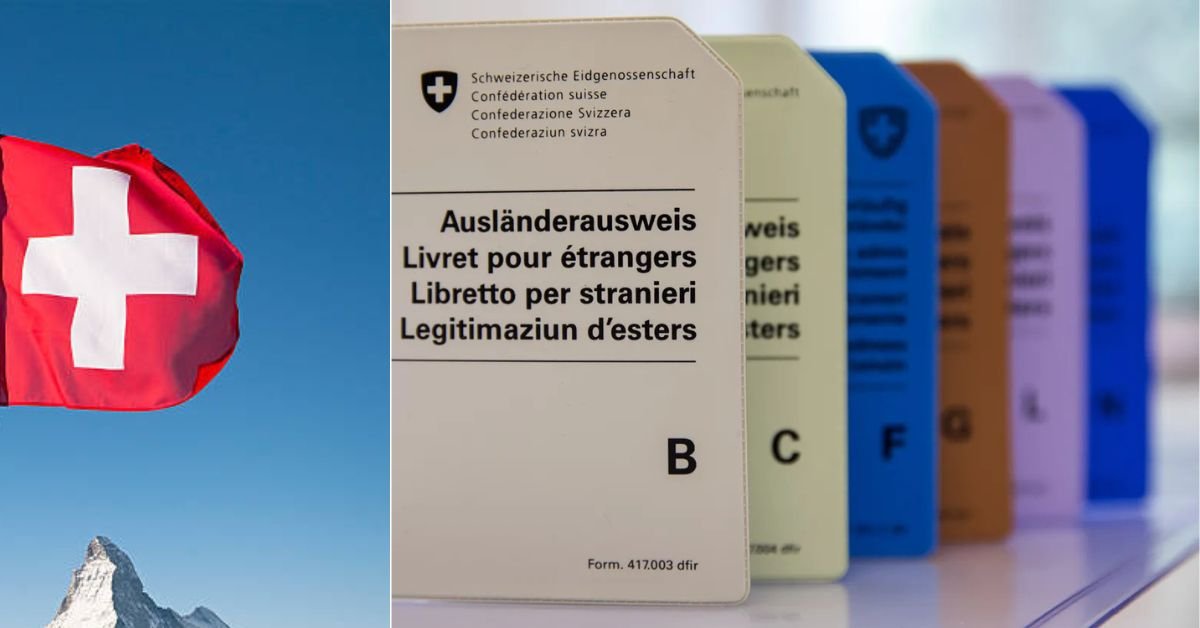
Switzerland Work Visa Requirements for Non-EU Citizens
The Long-term residence permit Switzerland (B Permit) is among the most sought-after immigration documents in the global world as Switzerland has the highest average wages and the best quality of life. But to the non-EU/EFTA nationals, the trip is arranged with pure merit with one of the most selective immigration systems in the world.
Are you a Highly qualified non-EU worker Switzerland and want to get a job and the needed requirements on the Swiss work permission requirements on non-EU citizens 2026, then the following description explains what your employer must do, what qualifications you must have and the quota system.
The Quota Constraint and the Visa Architecture
Switzerland has a dual labor market one to the EU/EFTA nationals, which is (relatively) open, and another severely restricted to all other (third-country nationals). The only way to achieve success is to know how to go around such limitations.
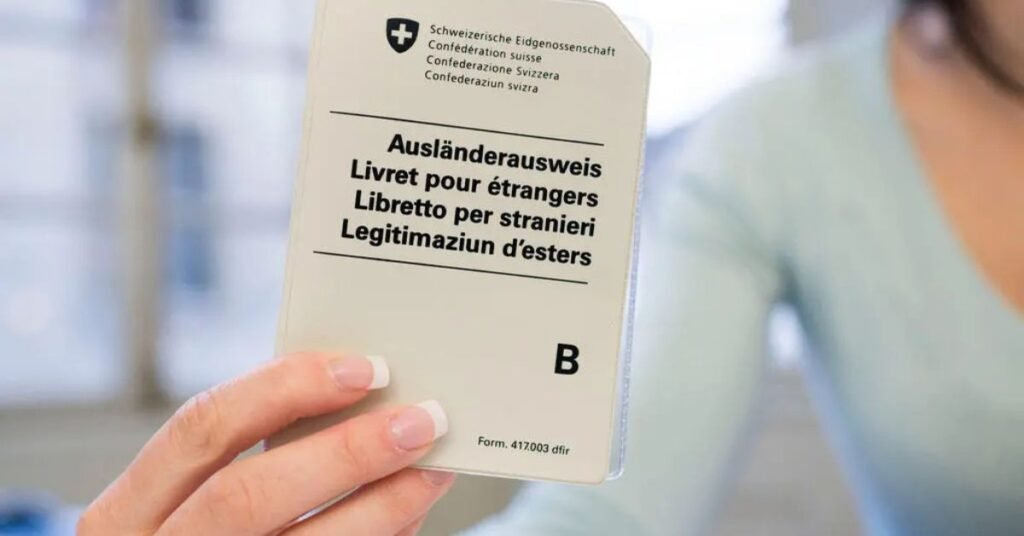
The Swiss Work Permit Quotas 2026
The Federal Council has verified that the tight permit quotas on non-EU/EFTA citizens per year will not be increased to 2026, which will leave everything unchanged but without additional breathing space.
- Overall Quota: 8,500 of the external skilled workers have EU/ EFTA.
- B Permits (Long-term): 4,500 annually. These are the favorable yearly renewable permits towards the permanent one (Residence permit C Switzerland after 10 years).
- L Permits (Short-term): 4,000 per year. These are temporary licenses (not exceeding 12 months) which are usually applied in special projects.
- Major fact: The national quota is not necessarily exhausted, but the rivalry is intense, and the Cantonal wallets (in particular in the economic centres of popularity, such as Zurich, Vaud, and Geneva) might dry up, thus postponing the applications. Filling early in the Q1 is preferable.
Eligibility and the Burden to the Employer
The employer is the motivator behind the work permit process, and not the desire of the applicant, unlike the normal visa. This is the gist of Swiss employer sponsorship non-EU.
Highly Qualified Requirement
In order to defeat the Priority of Swiss/EU/EFTA workers rule, you have to demonstrate such a level of skill that is actually in short supply on the local labor market. You should be one who is highly qualified as a professional.
- Education: Swiss visa or other higher level education A known University degree.
- Experience: Several years of proven working experience in a profession and as a Specialist that is needed to work in Switzerland (e.g., in management or a very technical field).
- Industry Specialization: The most successful applications are in shortage markets such as IT jobs Switzerland visa sponsorship, Healthcare jobs Switzerland visa support and Finance jobs Zurich visa.
The Triple Barrier Labor Market Test
The employer should convince the Cantonal Migration Office and the State Secretariat for Migration (SEM) that:
- The advertisement was conducted both locally and in the EU/EFTA region.
- No appropriate candidate was identified among citizens of Switzerland, EU, or EFTA ( Proof of local candidate shortage Switzerland).
- The employment is in the general economic interest of Switzerland.
Salary Parity
The employer is required to ensure that you will receive a salary that is compliant with Swiss and Cantonal standards concerning the position and the location. This will not be undercutting local workers.
- Salary Benchmark: Although there is no national Minimum salary in Switzerland work visa 2026, applicants with successful B Permits have high chances of being paid well. In skilled jobs in such hubs as Zurich and Geneva, average gross annual salaries usually are over CHF 100,000 in mid-to-senior positions, and the proposal must be sufficiently high to warrant the status of being a specialist.
The Application Timeline
The process is progressive with Switzerland as its beginning and your local embassy as the end. The process usually takes 8 to 16 weeks since the time of submission.
The Visa Application Steps Switzerland 2026
Job Offer Confirmed: You are already assured and have a Work contract needed to get Swiss permit information.
- Employer Submits: The employer presents the application of the work permit to the Cantonal Migration Office of the canton you will be employed (this begins the B permit application process non-EU worker).
- Cantonal Approval: The Canton grants the approval of the labor market test and transfers the file to the SEM Federal Migration Office Switzerland.
- Federal Approval: The SEM grants the application (when there is a quota slot).
- Consent Notification: The Canton informs the Swiss embassy visa application non-EU in your country of residence.
- Applicant Files: You present yourself to the Embassy with the approved work permit as your warrant to get a national entry visa (Type D).
Post-Arrival and Integration
The final compliance steps can be done in 14 days or so when entering Switzerland:
- Registration: This is done by registering at Cantonal Authority Switzerland (or local commune) to complete your B Permit.
- Insurance: Within three months, get mandatory Swiss health insurance requirements to work permit.
- AHV: Your employer guarantees your registration into the Swiss social security (AHV).
FAQs
Am I allowed to apply to the B Permit myself?
No. You are not allowed to apply as a non-EU/EFTA citizen like in other countries and become a B Permit holder. In Switzerland, the filing of the application is done by the sponsoring employer. When the permit is granted, you simply submit an application to the Swiss Embassy as entry visa (Type D).
Does the Swiss work permit quotas 2026 comply with strictness?
Yes. This system is highly selective as it has the quota system (4,500 B permits; 4,000 L permits) and the labor market test. It has to show that you are indispensable to your employer.
What is the processing time of the Cantonal Migration Office?
Processing time, including the employer filing through issuance of visa usually takes between 4 and 12 weeks though this may be further prolonged in case the Canton needs further documentation.Will my spouse be able to work in case I receive a B Permit?
Will my spouse be able to work in case I receive a B Permit?
Yes. B Permit holders are usually entitled to Family reunification Swiss work visa, and the spouse is entitled to employment anywhere in Switzerland without an additional work permit application, which is quite advantageous.
Should I apply to the L Permit in case my application is to take the temporary role?
The L short-term permit application can be expedited in case the position is actually temporary (within 12 months) and non-strategic. Nevertheless, in case there is a long-term potential of the position, it is always advisable to request the employer to apply B Permit since only L permits are very hard to renew back to back.
Final Thought
Successfully meeting the Switzerland Work Visa Requirements for Non-EU Citizens is a testament to your professional value. The system is designed to admit only the most skilled global talent who can demonstrate scarcity in the European market. Your key to success is securing an offer from an employer ready to navigate the Swiss employer sponsorship requirements non-EU and filing the application early in 2026 to beat the internal Cantonal quota rush.
Disclaimer
This article is for informational and educational purposes only. The information regarding Switzerland Work Visa Requirements for Non-EU Citizens, including the Swiss work permit quotas 2026 (4,500 B and 4,000 L permits), is based on current official information from the Swiss State Secretariat for Migration (SEM) and Cantonal authorities. Readers are strongly advised to verify all current requirements, fees, and procedures directly with the relevant Cantonal Migration