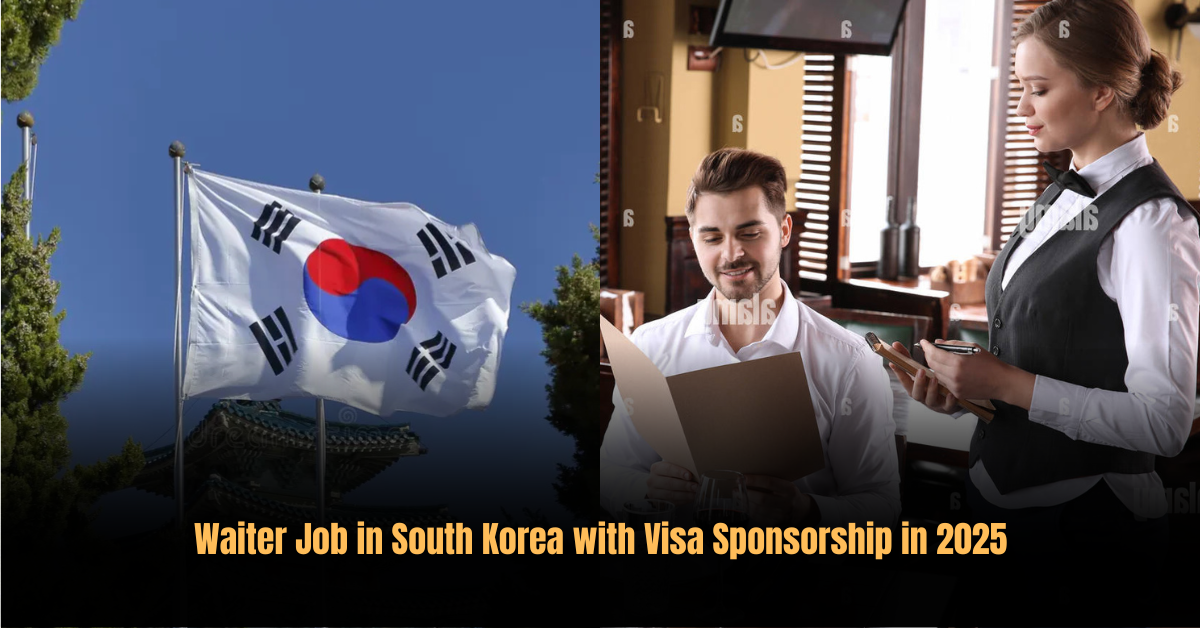
Do you dream of living in South Korea? Maybe you love K-pop, Korean food, and big modern cities like Seoul or Busan. Many people want to move to Korea for work and a new life.
In 2025, Korea needs more workers in hotels, cafés, and restaurants. Tourism is very strong, and more visitors come every year. Because of this, many places look for waiters and service staff. Some hotels and restaurants even give visa sponsorship so foreign workers can come and work legally.
This guide will help you understand how to get a waiter job in Korea. You will learn about visas, job search, salary, life in Korea, and future career growth.
The South Korea Job Market in Hospitality
The hospitality industry means jobs in restaurants, cafés, and hotels. Right now, Korea needs more people for these jobs.
If you speak English or another language, you have an advantage. If you can also speak Korean, you are even more valuable. Employers in Korea like workers who can welcome both locals and foreign guests.
Understanding the Visa Landscape for Hospitality Workers
To work in Korea, you must have a visa. A visa is your legal right to live and work in the country.
There are many types of visas. Some are good for professionals, and some are for students or part-time workers. For waiters, the path is not always simple, but there are ways to make it work.
The E-7 Visa: The Professional Pathway
The E-7 visa is for skilled workers. It is often used by engineers, IT workers, or managers. Sometimes, it can also be used by people in food and beverage management or workers with very special skills, like wine experts.
For normal waiter jobs, it is not easy to get this visa. You usually need:
- A university degree and at least 1 year of experience.
- Or, 5 years of experience if you don’t have a degree.
That is why many waiters cannot get this visa right away. But later, if you gain more skills and experience, it may be possible.
Alternative Routes: The E-6 and D-4-6 Visas
If you want to start as a waiter, you may look at these other visas:
- E-6 visa: This is for entertainment and cultural jobs. In some cases, it can include hospitality jobs in tourist places.
- D-4-6 visa: This is for people who study the Korean language. You can also work part-time with this visa. Many foreigners use this way. They study Korean, work in a café or restaurant, and later try for a full-time sponsored job.
- H-2 visa: This visa is for people from certain countries, especially those with Korean family roots. With this visa, you can work in many jobs, including restaurants.
The Job Search: Finding Your Sponsor
To get a visa, you need a job offer. The employer will be your sponsor. Without an employer, you cannot apply for a work visa.
Here are the important steps:
Crafting Your Resume and Cover Letter
When you make a resume for Korean jobs, keep it short and simple. Include a photo of yourself. Write your work history, like waiter, busser, or host.
Add skills like food service, customer service, and teamwork. If you know Korean, write about it. If you have a TOPIK score (Korean language test), it is very helpful.
Where to Look
- Job boards: Websites like Indeed, Glassdoor, and LinkedIn have many jobs in Korea. Use words like “waiter job Korea” and “visa sponsorship Korea.”
- Hotel and restaurant websites: Many big hotels and international restaurants post jobs on their websites. Look at their “Careers” page.
- Networking: Join expat groups on Facebook, Reddit, or KakaoTalk. Many foreigners share job offers and advice there.
The Reality of Life as a Waiter in Korea
Getting a job is only the first step. You also need to know what life is like in Korea.
Salary and Cost of Living
In 2025, the average salary for a waiter in Seoul is about ₩26,429,971 per year. This is enough for living, but not for saving a lot of money.
- Rent: A one-bedroom apartment in Seoul city center costs about ₩1,200,000 each month. A cheaper option is a goshiwon (a small room with shared facilities). These cost between ₩300,000 and ₩600,000.
- Food and utilities: Eating out often is expensive. Groceries are cheaper. Utilities like water, electricity, and internet are not too costly.
- Transport: Public transport in Seoul is very good and cheap. The subway and buses are easy to use.
So, you can live comfortably, but you may not save much money in the first months.
The Paperwork: A Step-by-Step Guide
After you get a job offer, you must prepare papers for your visa. The employer will help, but you also need to provide your own documents.
Documents you need:
- A valid passport with at least 6 months left.
- A filled and signed visa application form.
- Passport photos.
- A signed employment contract.
- Employer’s business certificate and invitation letter.
- A police check to show no criminal record.
- A health check to show you are healthy.
- Proof of education and work history (diplomas, letters, certificates).
When you arrive in Korea, you must apply for an Alien Registration Card (ARC) within 90 days. This card is very important. With it, you can open a bank account, rent a place, or get a phone number.
The Future of Your Career: A Long-Term View
A waiter job in Korea does not have to be only for a short time. You can grow and make a career.
- Many hotels and restaurants promote workers. You can move from server to supervisor, or even manager.
- You can get a food handler’s license or other certificates in Korea. These will help your resume.
- Learning Korean language well is the most important step. Better Korean means better pay and more job options.
If you work hard and keep learning, you can have a strong future in Korea.
Final Thoughts: Is a Waiter Job in South Korea for You?
Becoming a waiter in Korea is not always easy. The visa can be hard to get, and the cost of living is high. But if you are serious, it is possible.
Korea is a beautiful country with rich culture, tasty food, and kind people. If you prepare well, learn Korean, and stay motivated, you can succeed.
So, ask yourself: Are you ready for a new life in Korea? If yes, start now. Make your resume, look for jobs, and get ready for this big adventure.
If you still have questions about visa sponsorship or immigration rules in 2025, write them in the comments. And share this article with friends who also dream of working in Korea.